
Tag: ai

  • The Future of Leadership: Balancing Tech and Humanity

    The Future of Leadership: Balancing Tech and Humanity

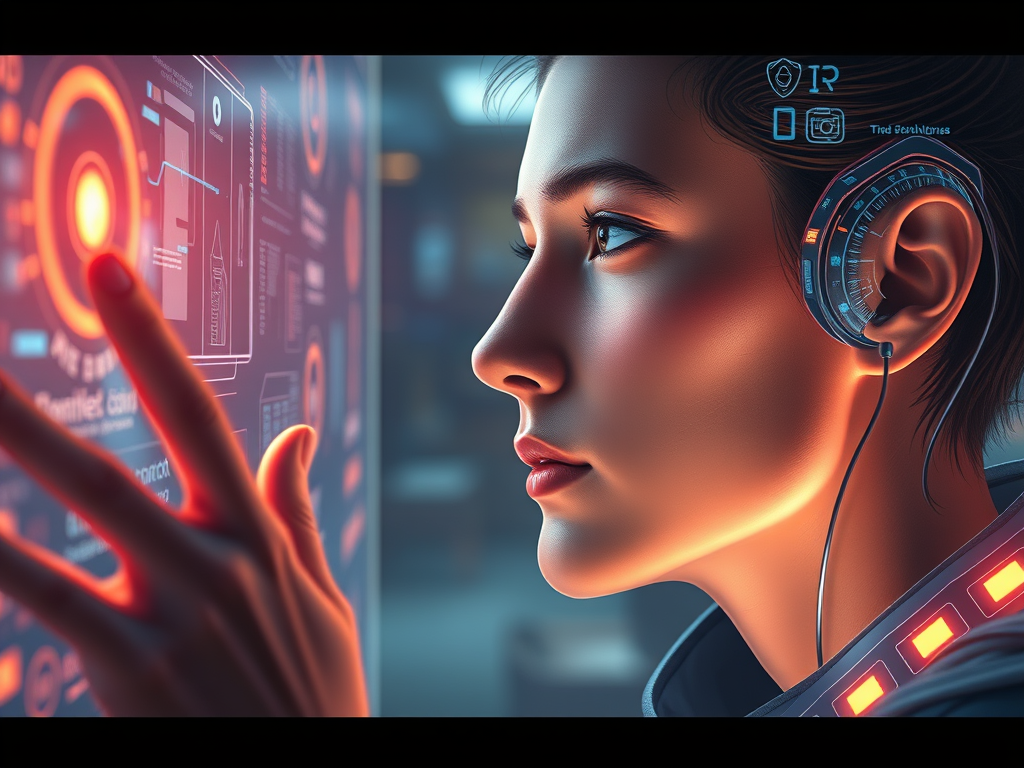
    In an age where artificial intelligence (AI), robotics, and automation are reshaping every industry, one critical question emerges: What does it mean to be human in a digital world? As machines grow more capable and lifelike, the differentiator for future leaders will not be technological proficiency alone, but authentic humanity.

    The Rise of Digital and the Return to Humanity

    With the advent of generative AI, machine learning, and robotic process automation (RPA), businesses have unlocked new efficiencies. Yet, ironically, as technology advances, the premium placed on uniquely human traits—empathy, creativity, integrity—will skyrocket. This is especially true in leadership.

    Research by the World Economic Forum (2023) shows that while 85 million jobs may be displaced by machines, 97 million new roles will emerge that are more adapted to the new division of labor between humans, machines, and algorithms. Among the top skills required? Emotional intelligence, leadership, resilience, and originality.

    Recruitment in the Human Age: Assessing the Inner Self

    Future recruitment won’t just assess what candidates can do, but who they are. Advances in neuroscience and psychometrics are enabling deeper evaluation of personality, motivation, and values. For critical roles, companies may employ functional MRI (fMRI) scans to understand decision-making under stress, or AI-driven psychographic assessments to reveal hidden personality traits.

    Some defence and security agencies already use brain imaging in high-stakes recruitment to predict cognitive resilience and honesty. While controversial, this could soon become standard in private sectors like aviation, emergency services, and C-suite roles.

    If we compared a CV to a blueprint of a house, future assessments will examine the foundation—how stable it is under pressure, how flexible it is in a storm, and whether the lights stay on when things go wrong.

    The Human Touch in a Robotic World

    While robots can mimic speech, gestures, and even empathy to an extent, customer service and workplace collaboration often require genuine emotional nuance. A chatbot may answer FAQs, but resolving a complex complaint or navigating a delicate interpersonal issue requires lived human experience.

    Forrester Research (2024) found that while 70% of customers will use AI for basic inquiries, 63% still prefer human interaction for complex or emotionally sensitive issues. The ambiguous, often emotionally charged nature of human relationships simply cannot be hardcoded.

    Humanity as a Science

    As robots become more human-like—both in appearance and interaction—we will paradoxically need to study humanity with greater rigour. The next leadership frontier will go beyond Emotional Intelligence (EQ) into what some experts now call Human Intelligence (HI)—the integration of emotional, social, ethical, and even existential awareness.

    Collaboration Over Command

    The very nature of leadership is evolving. In the past, titles conferred power. In the future, influence will arise from one’s ability to inspire, unite, and navigate complexity. As organisations flatten and adapt, we will see a shift toward collaborative leadership models—what’s sometimes called “hive thinking”.

    At Haier, a Chinese multinational, the traditional hierarchical model has been replaced by “microenterprises”—autonomous units where leaders emerge based on contribution, not title. It’s a living model of distributed, human-centric leadership.

    The future leader is not a conductor standing in front of an orchestra—but a jazz musician, harmonising with others in real time, adapting to change, and leading from within.

    Humanity in a World of Risk

    As global risks like pandemics, climate crises, geopolitical unrest, and resource scarcity loom, leaders will need to widen their scope. Beyond profit and efficiency, leadership must consider impactethics, and resilience. The leaders of tomorrow must be equipped not only to guide businesses but to navigate humanity through uncertainty.

    During the COVID-19 pandemic, leaders who prioritised empathy, well-being, and communication outperformed those who focused solely on performance metrics. Companies like Microsoft and Unilever set the tone with employee-first responses, showcasing that human-centered leadership drives loyalty and long-term success.


    Conclusion: Being Human Is the New Competitive Advantage

    As digital infrastructure becomes the norm, staying human will be the new differentiator. The future belongs to leaders who can integrate technology with authentic connection, data with empathy, and innovation with meaning.

    In the words of futurist Gerd Leonhard:

    “We will automate the work, but not the humanity. That must be preserved—by design.”
  • The Future of Leadership: Embracing Strengths and AI

    The Future of Leadership: Embracing Strengths and AI

    A Direct Link to the Key Skills You Need?

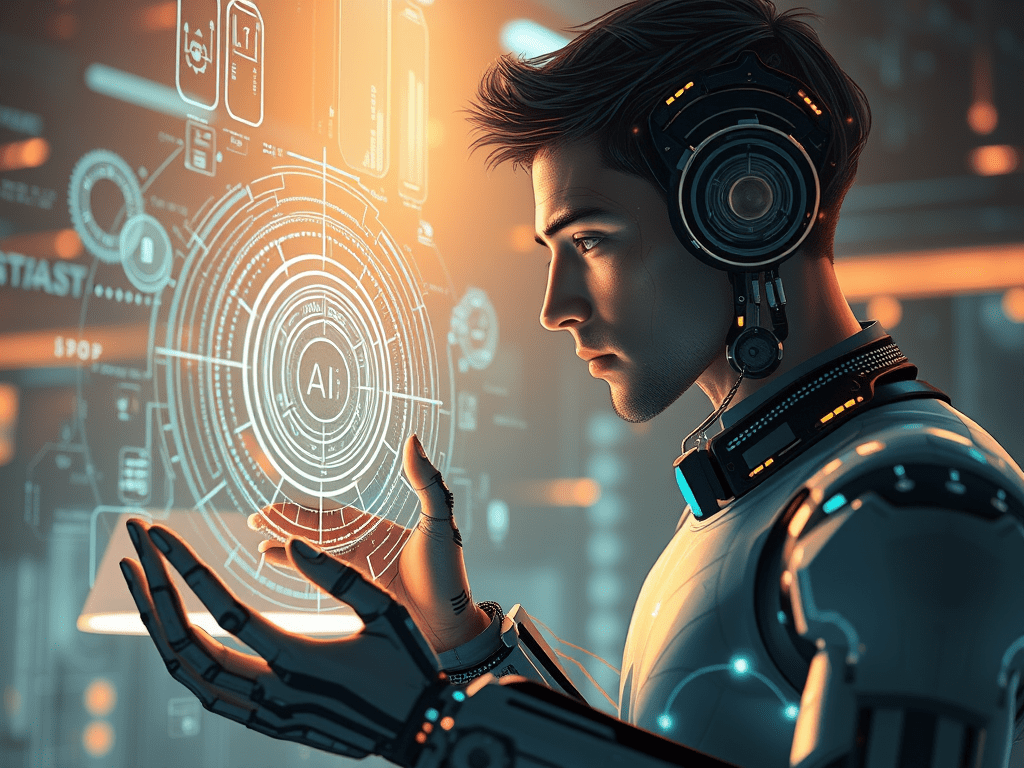
    Imagine a future where critical skills are no longer painstakingly acquired through years of study and experience, but instead, downloaded directly into the human brain. While this may sound like the realm of science fiction, rapid advances in neurotechnology suggest it might not be as far-fetched as it once seemed. In this possible future, individuals will already possess baseline competencies, making development less about instruction and more about stretching existing strengths, enhancing creativity, and deepening strategic thinking.

    Strengths-Based Leadership in a New Era

    In this evolving landscape, leadership itself is undergoing a seismic shift. Rather than focusing on fixing weaknesses or pushing employees to meet rigid performance targets, leaders will adopt a strengths-based development approach. This method emphasises nurturing what people already do well and encouraging them to expand those talents in meaningful, innovative ways.

    Crucially, leaders will need to foster environments of engagement, motivation, and inspiration. By paying close attention to the unique capabilities of their teams, they’ll ensure that employees remain enthusiastic and committed to their roles. In an increasingly virtual and globalised world, talent has the flexibility to work anywhere. If leaders fail to go the extra mile, retaining top talent will become exponentially harder.

    From Targets to Transformation

    The traditional performance conversation will be redefined. Instead of narrowly focusing on KPIs or quarterly goals, development discussions will centre around the question: “How can you be your absolute best?”Employees will be encouraged to bring forward ideas, drive innovation, and co-create value. Leaders will act as facilitators of growth rather than be enforcers of compliance.

    This shift aligns with the concept of the “whole person paradigm”—acknowledging that employees are not merely task-executors but complex individuals with aspirations, talents, and lives beyond the workplace. Effective leaders will take a holistic view, investing in their people’s long-term growth, wellbeing, and sense of purpose.

    Inspiring Through Experience, Not Instruction

    In the future, leadership inspiration will not come from top-down direction but from crafting the right mix of experiences, challenges, and resources. Leaders will curate conditions in which employees are empowered to lead, experiment, and grow. As artificial intelligence and automation take over many routine tasks, human leadership will centre on creativity, empathy, and innovation—traits machines cannot yet replicate.

    Vodafone’s AI-Powered Skills Mapping

    Vodafone UK is already using AI to shape its workforce of the future. By deploying machine learning to map existing skills against future business needs, Vodafone identifies gaps and recommends bespoke learning journeys for each employee. This AI-driven system enables staff to access training aligned with their strengths and career aspirations—accelerating both personal and organisational development.

    BP’s Digital Coaching Assistant

    Energy giant BP has piloted a digital coaching assistant powered by AI to deliver real-time feedback and developmental suggestions to its leaders. This virtual coach uses natural language processing to analyse communication patterns, offering tips on improving collaboration, emotional intelligence, and decision-making. Rather than replacing human coaches, this tool augments leadership development, making it more accessible and continuous.

    The Rise of the AI Performance Partner

    We are entering an era where performance management could be entirely overseen by AI. Picture a daily, weekly, or quarterly conversation with an AI-driven performance partner—a digital coach that understands your strengths, tracks your achievements, and provides on-demand support and resources. Such a system could free leaders to focus on strategic direction and relationship building, trusting AI to handle operational performance conversations.

    While this technology raises ethical and emotional considerations, its implementation could revolutionise leadership by automating administrative tasks and enabling hyper-personalised development for each team member.

    Will AI Lead Better Than Humans?

    The real challenge on the horizon is not just how humans will lead with AI—but whether AI will eventually lead better than humans. If AI can make more objective decisions, eliminate bias, and offer consistent development support, what role remains for human leadership? Could we be facing a future of machine-led leadership, or will human insight and emotional intelligence always hold a unique place in guiding teams?

    A Future in Flux

    We may be closer than we think to a world where leadership is redefined by algorithms and neural augmentation. As technology continues to evolve, leaders must stay curious, adaptable, and future-focused. The ability to integrate human empathy with technological precision will be the hallmark of the next-generation leader.

    Watch this space—because the future of leadership is already here.

  • The Future of Leadership

    The Future of Leadership

    Navigating a World of Exponential Change

    The future is arriving faster than ever. Exponential change driven by disruptive technologies, shifting demographics, and global socio-political realignments is fundamentally transforming how we live, work, and lead. As artificial intelligence, automation, and digital connectivity reshape every aspect of society, the very fabric of leadership must evolve to meet the challenges—and seize the opportunities—of this new era.

    A Brave New Workplace

    Jobs, as we know them, are undergoing a seismic transformation. Routine and repetitive tasks are increasingly being automated through robotics, bots, and sophisticated digital infrastructure. But this is not merely a story of job loss—it is also a story of job evolution. Emerging roles will demand new skills: digital fluency, emotional intelligence, creativity, and the ability to collaborate across cultures and platforms. Leaders will no longer be defined by positional power, but by their capacity to inspire, adapt, and learn continuously.

    A younger, more tech-native generation is entering the workforce, intuitively interacting with digital ecosystems. These individuals are not just employees—they are co-creators of work culture. Leadership must adapt to their expectations for purpose-driven work, flexibility, and lifelong learning. The workplace will become more fluid, decentralised, and intelligent. Smart campuses, integrated with wellness infrastructure, AI-enabled hot desking, and hybrid connectivity, will replace the traditional office. Remote and hybrid work models are no longer exceptions; they are the new standard.

    Technology and Human Connection

    The rise of artificial intelligence, virtual reality, and the immersive “multiverse” will redefine how we connect, collaborate, and create value. While there will be initial resistance—just as with any major technological leap—acceptance will follow as society begins to benefit from enhanced experiences. Whether it’s holding immersive global team meetings via VR or designing new products collaboratively across continents in real-time, the fusion of physical and digital realities will be central to tomorrow’s leadership landscape.

    Yet, this tech-driven future raises deeper questions: What happens when AI systems outperform humans in critical decision-making? What ethical frameworks must leaders uphold? What values will anchor our choices in a hyper-automated world?

    Global Tensions and Resource Pressures

    Demographic shifts will place intense pressure on global resources. A growing and ageing population will demand more food, energy, and healthcare. At the same time, geopolitical tensions—exacerbated by climate change, resource scarcity, the political landscape and ongoing war —could create volatility. Leadership will require not just commercial foresight but global citizenship—leaders who think systemically, act ethically, and build coalitions to navigate transnational challenges.

    Medical breakthroughs, including the decoding of ageing and bioengineered body parts, will extend human lifespans. This will dramatically reshape pensions, healthcare, and workplace dynamics, requiring leaders to rethink everything from retirement to multigenerational workforces.

    Learning from Leading Industries

    Automobile Industry – Tesla and the Autonomous Shift

    Tesla has not only revolutionised electric vehicles but also redefined leadership in the automotive space. Elon Musk’s leadership—while often controversial—has accelerated global transitions to sustainable transport. His vision-driven, high-risk leadership style has inspired a wave of innovation and forced incumbents to adapt. The development of self-driving technology highlights the shift from product-centric to software-centric leadership. The future leader in this space must understand AI, data ethics, and user trust while inspiring innovation at scale.

    Space and Defence – SpaceX and the Rise of Commercial Spaceflight

    In space and defence, leadership is moving from state-dominated models to agile, private-sector-led innovation. SpaceX exemplifies this shift. Once the domain of government agencies, space exploration is now shaped by private players who work faster, fail faster, and learn faster. Leadership here demands resilience, vision, and the ability to integrate cross-disciplinary teams—from aerospace engineering to cybersecurity. In defence, as AI-driven systems redefine warfare and surveillance, ethical leadership and international cooperation become crucial to prevent misuse.

    Sports – Data-Driven Performance and Mental Health Leadership

    Sports leadership has transformed through analytics and well-being prioritisation. Teams like Liverpool and the Golden State Warriors have adopted data-driven strategies for recruitment, training, and injury prevention. Simultaneously, leaders like Simone Biles and Naomi Osaka have spotlighted mental health, prompting a leadership shift from results-at-any-cost to athlete-centred approaches. Coaches and sports leaders are increasingly required to balance performance with empathy, understanding the psychological dimensions of peak performance.


    The Leadership Imperative

    In a world of ceaseless transformation, one truth stands firm: leadership must evolve. It must be human-centred yet technologically fluent, ethically grounded yet globally aware, agile yet purpose-driven. The leaders of tomorrow will be those who can navigate paradoxes, build inclusive teams, and turn uncertainty into opportunity.

    This is the first in a series exploring what the future of leadership truly demands. In upcoming parts, we will delve deeper into the emerging competencies, mindsets, and frameworks that tomorrow’s leaders must master.