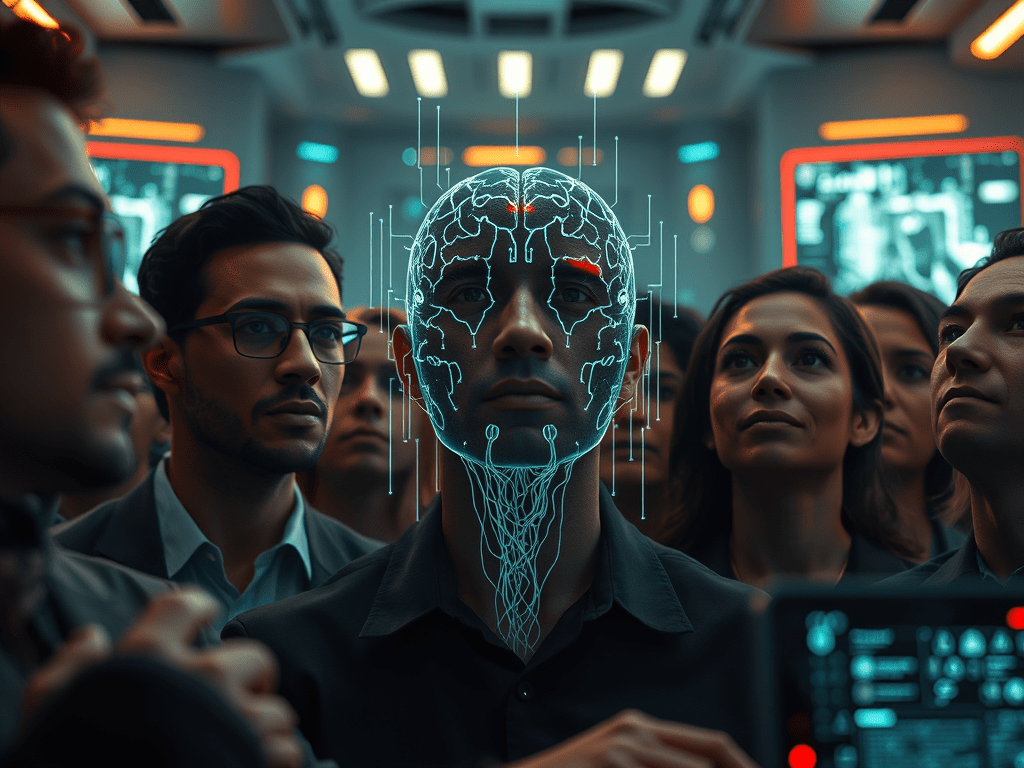

In the fast-changing landscape of modern business, the most dangerous phrase in leadership is “we’ve always done it this way.” The world is moving too quickly, markets are evolving too unpredictably, and technology is transforming too rapidly for leaders to cling to the illusion of certainty.
For the Future Ready Leader, success is no longer defined by avoiding mistakes — but by how quickly you learn from them.
Why Learning from Failure Defines the Future of Leadership
Failure has long been treated as something to hide or punish. In traditional, hierarchical systems, failure represented weakness — an error to be contained rather than a source of growth. But in the 21st century, this mindset is not only outdated, it’s dangerous.
Harvard Business School professor Amy Edmondson, one of the world’s leading authorities on organisational learning, found that the highest-performing teams are not those that make the fewest mistakes, but those that talk about mistakes openly, learn from them quickly, and create a climate of psychological safety. In her research with hospitals, Edmondson discovered that the best units actually reported more errors — not because they failed more, but because they were safer environments where people could admit mistakes and learn together.
Similarly, futurist and leadership thinker Terence Mauri notes that “leaders who fail fast, learn fast, and fix fast” are the ones who will shape the future. He calls failure “the new fuel for reinvention.”
The Future Ready Leader reframes failure not as something to avoid, but as an essential ingredient of innovation, resilience, and progress.
Why Organisations Must Evolve Beyond Perfectionism
In the traditional command-and-control model, leaders sought predictability and control. But the modern world is too complex to control and too dynamic to predict.
Organisations that cling to perfectionism are slow, risk-averse, and ill-equipped for disruption. Those that build cultures of learning instead become adaptive, innovative, and forward-thinking.
- Google’s Project Aristotle, a multi-year study on high-performing teams, found that psychological safety — the ability to take risks and admit failure without fear — was the number one factor behind success.
- MIT Sloan research shows that companies that embrace experimentation grow 50% faster than those that don’t.
- Deloitte’s Human Capital Trends report found that 85% of executives believe learning agility — not experience — will determine success in the future of work.
Learning from failure is not just a nice idea. It’s a strategic capability.
SpaceX and the Power of Productive Failure
Few organisations embody learning from failure as powerfully as SpaceX.
In its early years, three consecutive rocket launches failed, each one a public and costly disaster. Yet rather than retreat, founder Elon Musk treated each failure as data. After every explosion, the team conducted a deep analysis of what went wrong, shared insights openly across departments, and implemented rapid design improvements.
By the fourth launch, SpaceX succeeded — and in doing so, revolutionised space travel.
This relentless cycle of failure, learning, and iteration has since become the foundation of the company’s culture. Musk famously said, “If things are not failing, you’re not innovating enough.”
The lesson for future ready leaders: failure, when met with reflection and courage, becomes a competitive advantage.
Pixar and the Culture of Candour
In the creative world, failure is just as common — and just as critical to success.
Pixar, under the leadership of Ed Catmull, built one of the most successful creative organisations in history not by avoiding failure, but by normalising it. The company’s famous “Braintrust” meetings bring directors and producers together to critique films in development with honesty and respect.
Every project starts rough. Every idea is flawed. But by creating a safe space for constructive feedback and iteration, Pixar turns early failures into award-winning films.
Catmull wrote in Creativity, Inc.: “Mistakes aren’t a necessary evil. They aren’t evil at all. They are an inevitable consequence of doing something new.”
Healthcare and Learning from Mistakes
Healthcare, one of the most high-stakes environments imaginable, has also embraced failure as a teacher.
Many hospitals now use “morbidity and mortality” conferences — open forums where clinicians analyse errors or near-misses, not to assign blame but to understand what went wrong and how to prevent it in future.
These sessions have become cornerstones of safer medical practice, improving patient outcomes and creating cultures where honesty saves lives.
The same principle applies to any organisation: when people can speak openly about mistakes, the entire system learns faster.
From Fear to Growth: The Mindset of the Future Ready Leader
To lead in the future, you must shift from a fear-based mindset to a growth-based mindset — a concept popularised by psychologist Carol Dweck and championed by Amy Edmondson and Terence Mauri in leadership contexts.
Future ready leaders:
- See mistakes as feedback, not failure
- Value learning velocity over certainty
- Reward experimentation
- Encourage reflection after setbacks
- Model vulnerability by admitting their own missteps
Leaders who embody this mindset create teams that are agile, creative, and resilient — precisely the capabilities that will define success in the coming decade.
Key Behaviour Shifts: From Command to Curiosity
Moving from a culture of blame to one of learning requires conscious change. Here are the key shifts:
- From hiding mistakes → to discussing them openly
- From punishment → to reflection and improvement
- From ego → to curiosity
- From perfectionism → to progress
- From fear of failure → to learning from iteration
These are not small adjustments — they represent a fundamental redefinition of what it means to lead.
Practical Steps to Become a Leader Who Learns from Failure
- Model vulnerability first
Admit when you don’t have all the answers or when you’ve made a mistake. This gives your team permission to do the same. - Create psychological safety
Encourage open dialogue. When mistakes occur, ask, “What can we learn from this?” instead of, “Who is to blame?” - Debrief regularly
After projects, run “after-action reviews” focused on insights and learning rather than success or failure. - Reward curiosity and experimentation
Celebrate innovative attempts — even when they fail. Recognise effort and initiative as much as outcomes. - Shift performance conversations
Ask employees what they’ve learned and how they’ve grown, not just what they’ve achieved. - Build reflection time into your leadership routine
Learning from failure requires pause. Create moments each week to reflect, journal, or review what’s working and what’s not. - Encourage cross-team learning
Share stories of failures and lessons learned across departments to foster collective intelligence.
The Future Belongs to Those Who Learn Faster
In a world where disruption is constant, learning speed beats planning precision.
Terence Mauri reminds us that “disruption is not the enemy — complacency is.” The leaders who thrive in the future will be those who turn setbacks into stepping stones and failures into frameworks for innovation.
Amy Edmondson’s research continues to show that learning organisations — those that build psychological safety and normalise failure — outperform others not just in growth, but in resilience and long-term sustainability.
Failure will always be uncomfortable. But for the Future Ready Leader, it is the ultimate teacher.
Key Takeaway:
Future ready leadership is not about being flawless — it’s about being fearless enough to learn. The next generation of leaders will not be judged by how perfectly they avoid mistakes, but by how courageously they learn from them.