
Tag: futureleaders

  • Future Ready Leader: Learning from Failure

    Future Ready Leader: Learning from Failure

    In the fast-changing landscape of modern business, the most dangerous phrase in leadership is “we’ve always done it this way.” The world is moving too quickly, markets are evolving too unpredictably, and technology is transforming too rapidly for leaders to cling to the illusion of certainty.

    For the Future Ready Leader, success is no longer defined by avoiding mistakes — but by how quickly you learn from them.

    Why Learning from Failure Defines the Future of Leadership

    Failure has long been treated as something to hide or punish. In traditional, hierarchical systems, failure represented weakness — an error to be contained rather than a source of growth. But in the 21st century, this mindset is not only outdated, it’s dangerous.

    Harvard Business School professor Amy Edmondson, one of the world’s leading authorities on organisational learning, found that the highest-performing teams are not those that make the fewest mistakes, but those that talk about mistakes openly, learn from them quickly, and create a climate of psychological safety. In her research with hospitals, Edmondson discovered that the best units actually reported more errors — not because they failed more, but because they were safer environments where people could admit mistakes and learn together.

    Similarly, futurist and leadership thinker Terence Mauri notes that “leaders who fail fast, learn fast, and fix fast” are the ones who will shape the future. He calls failure “the new fuel for reinvention.”

    The Future Ready Leader reframes failure not as something to avoid, but as an essential ingredient of innovation, resilience, and progress.

    Why Organisations Must Evolve Beyond Perfectionism

    In the traditional command-and-control model, leaders sought predictability and control. But the modern world is too complex to control and too dynamic to predict.

    Organisations that cling to perfectionism are slow, risk-averse, and ill-equipped for disruption. Those that build cultures of learning instead become adaptive, innovative, and forward-thinking.

    • Google’s Project Aristotle, a multi-year study on high-performing teams, found that psychological safety — the ability to take risks and admit failure without fear — was the number one factor behind success.
    • MIT Sloan research shows that companies that embrace experimentation grow 50% faster than those that don’t.
    • Deloitte’s Human Capital Trends report found that 85% of executives believe learning agility — not experience — will determine success in the future of work.

    Learning from failure is not just a nice idea. It’s a strategic capability.

    SpaceX and the Power of Productive Failure

    Few organisations embody learning from failure as powerfully as SpaceX.

    In its early years, three consecutive rocket launches failed, each one a public and costly disaster. Yet rather than retreat, founder Elon Musk treated each failure as data. After every explosion, the team conducted a deep analysis of what went wrong, shared insights openly across departments, and implemented rapid design improvements.

    By the fourth launch, SpaceX succeeded — and in doing so, revolutionised space travel.

    This relentless cycle of failure, learning, and iteration has since become the foundation of the company’s culture. Musk famously said, “If things are not failing, you’re not innovating enough.”

    The lesson for future ready leaders: failure, when met with reflection and courage, becomes a competitive advantage.

    Pixar and the Culture of Candour

    In the creative world, failure is just as common — and just as critical to success.

    Pixar, under the leadership of Ed Catmull, built one of the most successful creative organisations in history not by avoiding failure, but by normalising it. The company’s famous “Braintrust” meetings bring directors and producers together to critique films in development with honesty and respect.

    Every project starts rough. Every idea is flawed. But by creating a safe space for constructive feedback and iteration, Pixar turns early failures into award-winning films.

    Catmull wrote in Creativity, Inc.“Mistakes aren’t a necessary evil. They aren’t evil at all. They are an inevitable consequence of doing something new.”

    Healthcare and Learning from Mistakes

    Healthcare, one of the most high-stakes environments imaginable, has also embraced failure as a teacher.

    Many hospitals now use “morbidity and mortality” conferences — open forums where clinicians analyse errors or near-misses, not to assign blame but to understand what went wrong and how to prevent it in future.

    These sessions have become cornerstones of safer medical practice, improving patient outcomes and creating cultures where honesty saves lives.

    The same principle applies to any organisation: when people can speak openly about mistakes, the entire system learns faster.

    From Fear to Growth: The Mindset of the Future Ready Leader

    To lead in the future, you must shift from a fear-based mindset to a growth-based mindset — a concept popularised by psychologist Carol Dweck and championed by Amy Edmondson and Terence Mauri in leadership contexts.

    Future ready leaders:

    • See mistakes as feedback, not failure
    • Value learning velocity over certainty
    • Reward experimentation
    • Encourage reflection after setbacks
    • Model vulnerability by admitting their own missteps

    Leaders who embody this mindset create teams that are agile, creative, and resilient — precisely the capabilities that will define success in the coming decade.

    Key Behaviour Shifts: From Command to Curiosity

    Moving from a culture of blame to one of learning requires conscious change. Here are the key shifts:

    • From hiding mistakes → to discussing them openly
    • From punishment → to reflection and improvement
    • From ego → to curiosity
    • From perfectionism → to progress
    • From fear of failure → to learning from iteration

    These are not small adjustments — they represent a fundamental redefinition of what it means to lead.

    Practical Steps to Become a Leader Who Learns from Failure

    1. Model vulnerability first
      Admit when you don’t have all the answers or when you’ve made a mistake. This gives your team permission to do the same.
    2. Create psychological safety
      Encourage open dialogue. When mistakes occur, ask, “What can we learn from this?” instead of, “Who is to blame?”
    3. Debrief regularly
      After projects, run “after-action reviews” focused on insights and learning rather than success or failure.
    4. Reward curiosity and experimentation
      Celebrate innovative attempts — even when they fail. Recognise effort and initiative as much as outcomes.
    5. Shift performance conversations
      Ask employees what they’ve learned and how they’ve grown, not just what they’ve achieved.
    6. Build reflection time into your leadership routine
      Learning from failure requires pause. Create moments each week to reflect, journal, or review what’s working and what’s not.
    7. Encourage cross-team learning
      Share stories of failures and lessons learned across departments to foster collective intelligence.

    The Future Belongs to Those Who Learn Faster

    In a world where disruption is constant, learning speed beats planning precision.

    Terence Mauri reminds us that “disruption is not the enemy — complacency is.” The leaders who thrive in the future will be those who turn setbacks into stepping stones and failures into frameworks for innovation.

    Amy Edmondson’s research continues to show that learning organisations — those that build psychological safety and normalise failure — outperform others not just in growth, but in resilience and long-term sustainability.

    Failure will always be uncomfortable. But for the Future Ready Leader, it is the ultimate teacher.


    Key Takeaway:
    Future ready leadership is not about being flawless — it’s about being fearless enough to learn. The next generation of leaders will not be judged by how perfectly they avoid mistakes, but by how courageously they learn from them.

  • Future Ready Leader: From Command and Control to Empowerment

    Future Ready Leader: From Command and Control to Empowerment

    The era of command-and-control leadership is fading fast. In a world defined by volatility, uncertainty, and continuous change, the leaders who will succeed are those who shift from directing to empowering — from telling people what to do, to creating the conditions that allow people to do their best work.

    Empowerment is no longer a “soft skill.” It is a strategic imperative. Research, global leadership examples, and workforce trends all point to the same conclusion: leaders who empower their people will be the ones who thrive in the future of work.

    Why Empowerment Matters Now

    For decades, leadership success was built on authority, hierarchy, and control. But today, business moves too quickly for one leader — or even one leadership team — to have all the answers. Employees expect autonomy, meaning, and trust. Organisations need rapid innovation, not rigid processes.

    Research from Gallup shows that companies with high employee engagement (driven largely by empowerment) achieve:

    • 21% higher profitability
    • 59% lower turnover
    • 41% lower absenteeism

    At the same time, McKinsey finds that empowered organisations are more innovative and more resilient, adapting better to disruption.

    Simply put: command and control slows organisations down. Empowerment accelerates them.

    How Empowered Leadership Transformed Microsoft

    One of the most striking examples of this shift is the cultural transformation at Microsoft under CEO Satya Nadella. When Nadella took over in 2014, Microsoft was losing relevance. Silos were entrenched, collaboration was low, and innovation had stalled.

    Nadella didn’t begin with new strategies; he began with a new mindset.

    He championed a “growth mindset” culture where leaders were encouraged to empower teams, remove fear, and enable experimentation. Rather than positioning himself as the all-knowing authority, he modelled curiosity, humility, and listening.

    This shift:

    • Broke down internal rivalry
    • Sparked innovation across divisions
    • Re-energised the workforce
    • Helped quadruple Microsoft’s market value

    The lesson is clear: empowerment is not about giving up control — it’s about unlocking collective intelligence.

    Why Command and Control Fails in Today’s Organisations

    1. It kills innovation

    People don’t take risks when they fear being judged or micromanaged.

    2. It slows decision-making

    Bottlenecks form when leaders insist on approving everything.

    3. It reduces motivation and ownership

    Employees disengage when they feel distrusted or undervalued.

    4. It pushes talent away

    The most capable people leave environments where their autonomy is restricted.

    The modern workforce is not motivated by compliance; it is motivated by contribution, connection, and meaningful work. Empowered cultures become magnets for talent.

    Healthcare’s Shift Toward Empowerment

    Although often seen as a traditionally hierarchical sector, healthcare is now one of the strongest examples of empowerment in action.

    Hospitals around the world have embraced “shared leadership models,” enabling nurses, clinicians, and multidisciplinary teams to shape decisions on patient care protocols, safety standards, and innovation in treatment pathways.

    This shift has resulted in:

    • Faster decision-making
    • Higher quality patient outcomes
    • Greater staff engagement
    • Reduced burnout

    Healthcare leaders learned that frontline expertise is often the richest source of insight — and that empowering those closest to the work leads to better results.

    Burberry and Creative Empowerment

    When Angela Ahrendts became CEO of Burberry, she recognised that creative talent was being stifled by corporate control. Designers lacked freedom, innovation was inconsistent, and the brand had lost cultural relevance.

    Ahrendts reversed this by decentralising creative authority and empowering designers to experiment and push boundaries. She created collaborative spaces, built cross-functional creative squads, and encouraged open sharing of ideas.

    Within a few years, Burberry became one of the most digitally innovative luxury brands in the world, tripled its share price, and reclaimed its status as a global icon.

    The message: empowerment isn’t just operational — it fuels creativity and brand strength.

    Insights from Research on Empowering Leadership

    Academic and organisational research reinforces the shift:

    • Harvard Business Review identifies empowering leadership as a core predictor of high-performing teams, especially in complex or ambiguous environments.
    • MIT Sloan Management Review reports that organisations with empowered employees are 4.5 times more likely to be “top performers.”
    • Deloitte’s Human Capital Trends shows that 72% of employees expect their leaders to provide autonomy, not micromanagement.
    • Amy Edmondson’s studies on psychological safety reveal that teams who feel empowered to speak up and take risks outperform those who don’t.

    Empowerment is no longer aspirational — it is evidence-based.

    Key Behaviour Shifts: From Command to Empowerment

    Becoming an empowering leader requires conscious behaviour shifts. Here are the core movements:

    From directing to coaching

    Guide people through questions, not instructions.

    From “my way” to “best way”

    Invite ideas and co-create solutions rather than dictating them.

    From micromanaging to trusting

    Give people the autonomy to do their work — and only intervene when needed.

    From judging mistakes to learning from them

    Create a culture where experimentation is safe and failure is a teacher.

    From controlling information to sharing it

    Transparency is the foundation of trust and empowerment.

    Practical Steps to Become a More Empowering Leader

    Here are actionable steps leaders can begin using immediately:

    1. Start asking better questions

    Move from “Here’s what I want you to do” to questions like:

    • “What approach do you think makes sense?”
    • “What support do you need from me?”
    • “How would you solve this?”

    2. Delegate outcomes, not tasks

    Share the why and the what, and let your people define the how.

    3. Remove barriers

    Use your authority to clear obstacles rather than impose controls.

    4. Create shared goals

    Co-design goals with teams so they feel ownership and clarity.

    5. Celebrate initiative and effort

    Reward experimentation — not just the final results.

    6. Build psychological safety

    Encourage candour, curiosity, and diverse perspectives.

    7. Practice “leadership as listening”

    Create space for your people to be heard, and act on what they share.

    The Future Leader Is an Empowering Leader

    The leaders of tomorrow will succeed not because they hold power, but because they share it.

    Empowerment unlocks creativity.
    Empowerment accelerates learning.
    Empowerment builds trust.
    Empowerment drives performance.

    And above all, empowerment prepares organisations for the unpredictable future ahead.

    As complexity rises, the organisations that thrive will be those with leaders who empower their people to think, innovate, and act boldly. Command and control belongs to the past. Empowered leadership belongs to the future.

  • Future Ready Leader: The Behaviours That Will Define Tomorrow’s Leadership

    Future Ready Leader: The Behaviours That Will Define Tomorrow’s Leadership

    The leaders who will thrive in the years ahead are not those who cling to the outdated models of command and control, but those who embrace a new set of behaviours built for a world of disruption, complexity, and constant change. Future Ready Leader balances strength with humility, foresight with adaptability, and intuition with data. These qualities aren’t optional—they are becoming essential for anyone who hopes to inspire teams, shape organisations, and influence society in a rapidly evolving landscape.

    From Command and Control to Empowerment

    The industrial-era model of leadership rewarded direction, discipline, and hierarchy. But research consistently shows this approach stifles creativity and disengages people. Gallup’s studies reveal that highly engaged teams deliver 21% higher profitability, and empowerment is at the heart of engagement. Satya Nadella understood this when he took over as CEO at Microsoft. By encouraging a growth mindset, dismantling silos, and shifting from a culture of competition to collaboration, he unlocked innovation and transformed Microsoft into one of the most valuable companies in the world. Tomorrow’s leaders will succeed by empowering, not controlling.

    Embracing Failure as a Teacher

    In a future defined by experimentation and rapid innovation, failure is not an endpoint but a vital learning point. Harvard professor Amy Edmondson’s work on psychological safety shows that the best teams are those who can discuss errors openly and learn quickly. This is why practices like the “morbidity and mortality” conferences in healthcare, where doctors candidly dissect mistakes, lead to safer outcomes and stronger systems. Leaders who normalise failure—and learn from it—equip their teams to innovate without fear.

    The Strength of Vulnerability

    Too often, leaders equate vulnerability with weakness. In fact, it is the opposite. When leaders admit uncertainty, share their humanity, and connect authentically, they build trust. Jacinda Ardern, during her time as Prime Minister of New Zealand, embodied this by combining empathy with decisive action in times of crisis. Far from diminishing her authority, her openness deepened public trust. For future ready leaders, vulnerability will be a vital source of strength.

    Knowing When to Stop

    One of the most underrated skills of leadership is the ability to stop—whether that means ending unproductive meetings, abandoning outdated practices, or letting go of legacy projects that no longer add value. Toyota’s Kaizen philosophy of continuous improvement emphasises not just doing more but cutting waste and freeing energy for innovation. Leaders who learn to stop as well as start will create the focus their organisations need to thrive.

    Leading with Agility

    Agility is more than speed; it is the capacity to pivot when conditions change. McKinsey’s research shows that agile organisations are 70% more likely to rank in the top quartile for performance and health. Spotify offers a striking example: its use of autonomous “squads” empowered to adapt quickly to customer needs has become a model of agility in action. Future ready leaders will need to create similar conditions, where teams can experiment, move fast, and respond to shifts with confidence.

    Thinking Ahead—And Beyond

    The leaders of tomorrow are not only agile in the present but visionary about the future. Elon Musk, despite his controversies, illustrates how thinking years ahead can redefine industries, from electric cars to private space travel. Yet true future thinkers go further still: they think beyond the confines of leadership itself, seeing their role as shaping ecosystems, societies, and even the planet. Paul Polman did this as CEO of Unilever by embedding sustainability into the heart of strategy, moving the company beyond quarterly profits toward long-term societal impact. This broader perspective will be a hallmark of future ready leadership.

    Trust as the Currency of Leadership

    With hybrid and distributed work becoming the norm, leaders can no longer rely on micromanagement. Trust has become the new currency. GitLab, the world’s largest all-remote company, demonstrates how far this can go: with no physical offices, it operates entirely on a foundation of trust and transparency. Its leaders empower employees across the globe to act autonomously within clear structures. For future ready leaders, cultivating trust will be central to creating both freedom and accountability.

    Balancing Data with Intuition

    Finally, the leader of the future must learn to navigate the tension between hard data and human intuition. Data provides clarity, but in ambiguous and fast-moving situations, intuition—sharpened by experience—remains indispensable. A PwC survey found that nearly two-thirds of executives rely on both intuition and data in strategic decision-making. Formula 1 teams illustrate this balance perfectly: real-time analytics guide race strategy, but the instincts of drivers like Lewis Hamilton still determine split-second success. The future belongs to those who combine these two modes of decision-making rather than privileging one over the other.

    Why These Behaviours Matter Now

    The convergence of artificial intelligence, global crises, climate change, and shifting workforce expectations demands nothing less than a reinvention of leadership. The leaders of tomorrow will not be defined by control or charisma alone, but by their ability to empower others, learn from setbacks, demonstrate humanity, foster agility, anticipate the future, act with trust, and integrate both science and instinct.

    The future is already here. The question for today’s leaders is simple: are you ready to step into it?

  • Leadership Development in the Future: From Experiential Learning to Neural Programming

    Leadership Development in the Future: From Experiential Learning to Neural Programming

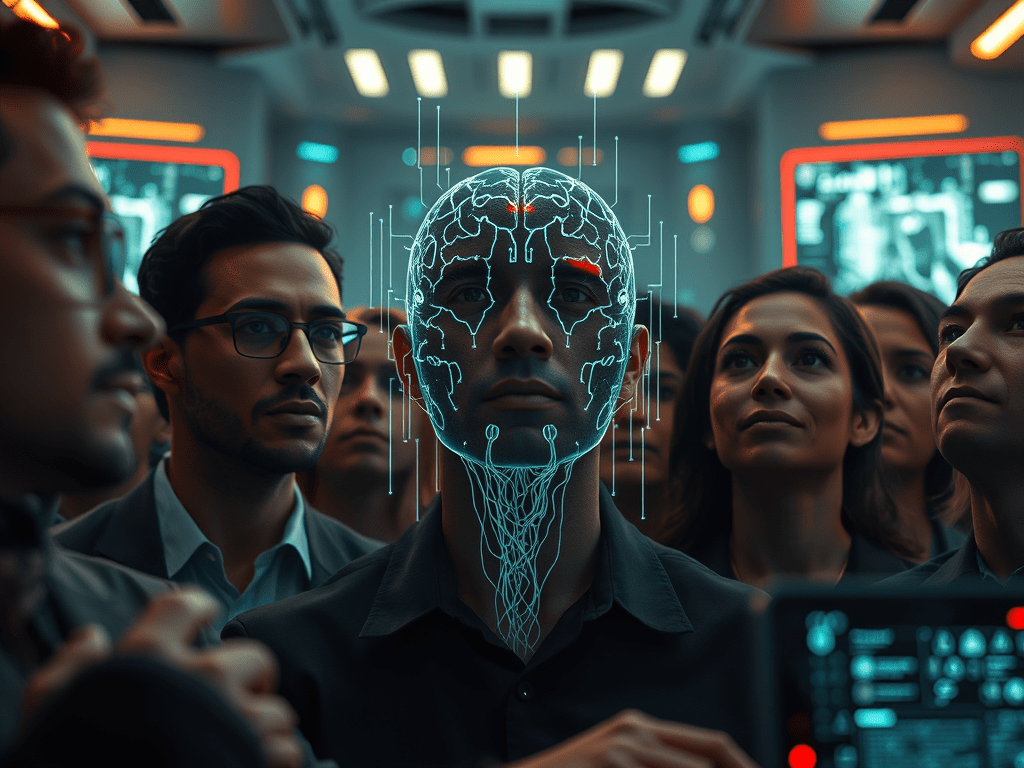
    The future of leadership development may look radically different from today. We are on the cusp of a technological revolution that could enable leadership skills to be uploaded directly into the human brain — bypassing years of education, mentoring, and trial-and-error experience.

    Imagine a scenario inspired by The Matrix, where Neo downloads the ability to fight, speak multiple languages, or pilot a helicopter in seconds. Now apply that to leadership:

    • “History of Leadership” program: understanding centuries of leadership evolution and philosophy.
    • “EQ Leader” module: embedding deep emotional intelligence and empathy into your neural patterns.
    • “Empowering Leaders” suite: programming skills for influence, coaching, and delegation.

    In such a world, the old debate — are leaders born or made? — becomes both irrelevant and strangely literal. Future leaders could be genetically predisposed to leadership traits before birth (via CRISPR or similar gene-editing technology) and later have leadership skills programmed directly into their brain via neuro-interfaces.

    The ethical questions are enormous: Should leadership be “engineered” in this way? Would society allow such interventions? Who decides what “good leadership” is? While these questions remain unresolved, the technology trajectory suggests it will be possible within decades.

    The Critical Principle: Change Thinking to Change Behaviour

    One principle remains constant — even in a hyper-technological future:

    If you want to change behaviour, you must first change the thinking behind the behaviour.

    This is the foundation of cognitive-behavioural theory, which asserts that our thoughts shape our emotions, which in turn drive our behaviours. In leadership, this means that addressing poor, dysfunctional, or outdated leadership behaviour requires shifting the underlying mental models.

    Two questions arise:

    1. Can behaviour change happen before thinking changes?
      Behavioural “nudges” (Thaler & Sunstein, 2008) can shape action without conscious thought, but without deeper cognitive change, these shifts are often temporary.
    2. Do leaders need experiences that provoke new thinking?
      Research on transformative learning (Mezirow, 1991) suggests that leaders often need a “disorienting dilemma” — a challenging or uncomfortable experience — to trigger reflection and reframe their perspective.

    Current Pathways to ‘Programming’ Leadership Without Direct Brain Interfaces

    While we can’t yet jack leadership programs into the brain, we can design development systems that effectively rewire thinking over time.

    1. Experiential Learning (Immediate Impact)
    Immersive leadership simulations, cross-functional projects, and real-world stretch assignments provide “aha” moments that shift leaders’ perspectives quickly.

    • Case Study: At Unilever, senior leaders participate in “Leadership Labs” where they work on live global sustainability challenges. Feedback loops and coaching ensure behavioural insights stick.

    2. Strategic Leadership Content (Long-term Impact)
    A sustained leadership content strategy can subtly reprogram thinking. Leaders receive consistent, strategically aligned messages about values, decision-making, and behaviours.

    • Case Study: Microsoft’s “Growth Mindset” campaign under Satya Nadella embedded cultural and leadership shifts through repeated storytelling, internal communications, and leadership exemplars over years — leading to measurable shifts in innovation and collaboration.

    From Thought Leadership to Thought Engineerin

    When thought leadership is strategically planned and aligned to business strategy, it becomes a subtle yet powerful tool to reshape leaders’ thinking and behaviours.

    This approach:

    • Reinforces organisational values.
    • Models desired leadership behaviours.
    • Prepares leaders for the emerging world of AI, automation, and remote-first workplaces.

    As VR, AR, and metaverse-based simulations mature, we will see “thought engineering” — the ability to run leaders through hyper-realistic, emotionally rich scenarios that train their judgment, resilience, and empathy in safe yet impactful environments.

    The Question for Today

    The future is moving towards neuro-enhanced leadership. Until that day arrives, organisations must ask:

    • Are we building traditional leaders who can only function in today’s environment?
    • Or are we creating future-ready leaders whose thinking is agile, inclusive, and adaptive enough to thrive in tomorrow’s unknowns?

    The leaders of the future will not just manage people — they will integrate with technology, navigate ethical dilemmas of human enhancement, and shape a world where the line between human potential and machine augmentation is increasingly blurred.

    The challenge for today’s leadership developers is clear: we must lay the cognitive groundwork now so that when technology catches up, our leaders will be ready not just to lead effectively — but to lead wisely.

  • Redesigning Leadership: Rethinking How We Choose Those Who Lead the World

    Redesigning Leadership: Rethinking How We Choose Those Who Lead the World

    In recent history, we have arguably not stood so perilously close to the edge of global catastrophe since the Cold War. Today’s geopolitical, environmental, and economic challenges—amplified by wars, misinformation, populism, climate crisis, and technological disruption—require leadership of extraordinary wisdom and integrity. Yet, many citizens across the globe are increasingly disillusioned with the caliber and character of those at the helm of power.

    Many world leaders today appear to be propelled into office not by a rigorous display of leadership acumen or moral compass, but by popularity contests, entrenched political machinery, and in some cases, outright manipulation. The disparity between the gravity of their responsibilities and the lack of scrutiny in their selection process is both staggering and dangerous.

    Let’s pause here for a moment: consider what it takes to become a CEO of a major corporation, or even a mid-level manager in a Fortune 500 company. Candidates are routinely subjected to intensive recruitment processes—panel interviews, case studies, psychometric assessments, situational judgment tests, emotional intelligence screening, and sometimes even security vetting. All this to ensure they are “right” for the role.

    Now contrast this with how we select leaders who control nuclear arsenals, shape global trade, manage trillions in public funds, and make life-and-death decisions. In many cases, all that is required is charisma, campaign funding, party backing, and votes—no formal vetting of competence, integrity, or psychological stability. This is not just a flaw in the system; it’s a fundamental threat to global stability.

    Why Are World Leaders Not Subjected to More Rigorous Evaluation?

    This question demands global attention. If leadership roles in the corporate world require stringent assessment, should we not demand even more from those who seek to lead entire nations?

    Let’s explore a few provocations:

    • Should there not be standardised integrity, morality, and truthfulness assessments for political candidates?
    • Why do we not mandate psychological fitness and leadership capability testing as a prerequisite?
    • Why do systems not penalise or filter out corruption, narcissism, or criminal behaviour before candidacy is even possible?

    These are not just theoretical musings. Consider how the corporate world uses competency frameworks to evaluate potential leaders against clear indicators—vision, ethics, emotional intelligence, innovation, resilience. Imagine if the same standards applied to global politics.

    Leadership Examples: A Tale of Two Worlds

    To underscore this, consider two leaders often held up as polar opposites:

    • Jacinda Ardern (New Zealand) – Widely praised for her empathetic, inclusive leadership style during crises such as the Christchurch mosque shootings and the COVID-19 pandemic. Ardern’s decision-making combined emotional intelligence with clarity and humility—hallmarks of modern, people-centered leadership.
    • Vladimir Putin (Russia) – Under his long tenure, political dissent has been violently suppressed, disinformation weaponised, and military aggression normalised. While strategic and powerful, his leadership reflects the perils of unchecked authority and manipulated democratic systems.

    Or consider:

    • Nelson Mandela, whose leadership was built on deep personal sacrifice, reconciliation, and the moral authority of his lived experience. Had a modern-day political assessment centre existed in apartheid-era South Africa, would it have validated his leadership or denied him access? This reminds us that any system we develop must balance humanistic values with competence.

    Reimagining the Recruitment of World Leaders

    In the future, we must evolve our political selection processes with the same level of discipline and innovation as we have in corporate governance or scientific exploration. Here’s how such a system might look:

    1. Pre-Candidacy Evaluation Centres:
      Candidates must undergo rigorous evaluation, including:
      • Cognitive and emotional intelligence testing
      • Ethics and morality assessments
      • Simulations of crisis management and negotiation
      • Transparency audits of their personal and financial records
    2. Independent, Impartial Oversight:
      A neutral global body—ideally powered by advanced AI but governed by democratic principles—could manage these assessments, ensuring they are free from political bias or corruption.
    3. Ongoing Leadership Fitness Reviews:
      Just like professional certifications require continued education, world leaders should be subject to annual assessments and public scorecards—evaluating performance, behavior, and alignment with public service ethics.
    4. Onboarding and Governance:
      New leaders would undergo onboarding programs focusing on international law, ethics, and sustainability. They would also sign binding commitments to transparency, truthfulness, and non-personal enrichment.

    A Glimpse Into the Future: AI vs. Genetically Enhanced Leaders?

    As AI continues to evolve, it’s not far-fetched to imagine a future where artificial intelligence either advisesaugments, or even replaces human leadership in certain capacities. In parallel, advancements in genetic engineering may produce humans with enhanced cognitive and emotional capabilities. The debate may soon shift from “Who should lead us?” to “What should lead us?”

    Will AI governance be more just and rational than human fallibility? Will genetically enhanced humans have the wisdom to avoid the flaws of their predecessors—or will they simply be better, faster versions of the same corrupted ambitions?

    Final Thoughts: The Time to Act Is Now

    The world is standing at a dangerous crossroads. If we want a future worth living in, we must radically reimagine how we select those who lead us. Not just for their party loyalty or popularity, but for their capacity to guide humanity through an age of unprecedented complexity.

    The stakes are too high to leave leadership to chance, charisma, or inherited privilege. If we can redesign cars to drive themselves, cities to become smart, and medicine to be personalised—surely we can redesign the very systems that decide who leads us.

    As Plato once said: “The price good men pay for indifference to public affairs is to be ruled by evil men.”

    The time has come for global citizens to demand better. Not just for today—but for generations yet to come.

  • Leading Through Disruption: Strategies for Tomorrow’s Leaders

    Leading Through Disruption: Strategies for Tomorrow’s Leaders

    The modern world is no longer one of gradual evolution — it is one of radical disruption. Change has become the only constant, and the pace of innovation continues to accelerate exponentially. Leaders today are not merely tasked with managing people or processes. They are now expected to foster a culture of innovation, empower others to lead, and navigate disruption in ways that unlock creativity, critical thinking, and learning agility.

    Welcome to the VUCA world — Volatile, Uncertain, Complex, and Ambiguous. And it is only becoming more so.

    Learning from Disruption: Case Studies Across High-Stakes Sectors

    To understand the true scale of disruption — and how leadership must respond — we can look to some of the most extreme environments in the world.

    Medicine: The Pandemic Response and the mRNA Revolution

    When COVID-19 struck, healthcare systems were overwhelmed globally. Traditional vaccine development takes 10–15 years — but through collaborative leadership, the biotech sector delivered mRNA vaccines in under 12 months. Companies like Moderna and BioNTech/Pfizer relied on agile leadership, rapid prototyping, and global cooperation. This was not just medical innovation; it was a demonstration of how trust, empowered teams, and clear vision can change the course of history.

    The NHS also exemplified agile leadership — hospitals were restructured overnight, retired clinicians were brought back, and digital health solutions were deployed in record time. This wasn’t luck — it was resilient leadership under fire.

    Weaponry: Ukraine and the Democratisation of Defence

    In the conflict in Ukraine, traditional military hierarchies gave way to asymmetric, decentralised command structures. Soldiers used off-the-shelf drones, modified PlayStation controllers, and mobile phones to disrupt more heavily resourced opponents. Leadership was pushed down the chain of command — a necessity in a digital-first battlefield.

    This new model, blending innovation and rapid feedback loops, is a lesson to corporate leaders: your team may already have the tools they need — they just need the freedom to innovate and the confidence to act.

    Aerospace: NASA, SpaceX, and the Rebirth of Space Travel

    SpaceX, unlike its predecessors, succeeded by embracing failure. While NASA avoided risk at all costs after tragedies like Challenger and Columbia, Elon Musk’s teams launched, failed, learned, and launched again — faster. By iterating quickly and treating every setback as a lesson, SpaceX broke decades of stagnation in space travel.

    Now, NASA collaborates with private firms using new models of public-private partnership, showing how legacy institutions can evolve when they adopt agile thinking and empower bold leadership.

    Airlines: Safety Through Learning Cultures

    The aviation industry transformed itself from one of the most dangerous to the safest in the world through a culture of continuous learning and psychological safety. Today’s cockpit hierarchy encourages co-pilots to challenge captains if something seems off. This was not always the case — but the recognition that everyone has a leadership role saved lives and reshaped airline safety protocols globally.

    Leadership Must Change – and Fast

    As we navigate megatrends like digitisation, urbanisation, globalisation, and AI integration, leadership must shift from control to enablement. In a world where human and technology are becoming inseparable, the old models of command and control will become obsolete.

    The younger generations entering the workforce are value-driven, tech-savvy, and demand authenticity and autonomy. Leadership will need to evolve — perhaps even beyond recognition — as it adapts to a more fluid, diverse, and connected world.

    Future-Proofing Leadership: What You Must Do Now

    If you want to stay ahead of the curve, you cannot wait for change to come to you. Instead, adopt a proactive leadership model built on:

    • ✅ Empowerment: Treat your people like leaders. Give them ownership and responsibility.
    • ✅ Trust: Let go of micro-management and cultivate psychological safety.
    • ✅ Curiosity: Ask meaningful, open-ended questions that foster deeper thinking.
    • ✅ Connection: Bridge people and ideas across functions, disciplines, and even industries.
    • ✅ Clarity: Articulate a shared vision in a noisy, fast-changing world.

    Final Thought: From Control to Co-Creation

    The truth is, we never were fully in control of the future. But now, more than ever, disruption will transform our lives whether we’re ready or not. We can fight it — or we can learn to co-create with it.

    The leaders of tomorrow will not be those who hold tightly to power. They will be those who let go — and lead from trust, courage, and vision.

    Because in a world of disruption, the only sustainable leadership is the kind that evolves.


  • The Future of Leadership: Balancing Tech and Humanity

    The Future of Leadership: Balancing Tech and Humanity

    In an age where artificial intelligence (AI), robotics, and automation are reshaping every industry, one critical question emerges: What does it mean to be human in a digital world? As machines grow more capable and lifelike, the differentiator for future leaders will not be technological proficiency alone, but authentic humanity.

    The Rise of Digital and the Return to Humanity

    With the advent of generative AI, machine learning, and robotic process automation (RPA), businesses have unlocked new efficiencies. Yet, ironically, as technology advances, the premium placed on uniquely human traits—empathy, creativity, integrity—will skyrocket. This is especially true in leadership.

    Research by the World Economic Forum (2023) shows that while 85 million jobs may be displaced by machines, 97 million new roles will emerge that are more adapted to the new division of labor between humans, machines, and algorithms. Among the top skills required? Emotional intelligence, leadership, resilience, and originality.

    Recruitment in the Human Age: Assessing the Inner Self

    Future recruitment won’t just assess what candidates can do, but who they are. Advances in neuroscience and psychometrics are enabling deeper evaluation of personality, motivation, and values. For critical roles, companies may employ functional MRI (fMRI) scans to understand decision-making under stress, or AI-driven psychographic assessments to reveal hidden personality traits.

    Some defence and security agencies already use brain imaging in high-stakes recruitment to predict cognitive resilience and honesty. While controversial, this could soon become standard in private sectors like aviation, emergency services, and C-suite roles.

    If we compared a CV to a blueprint of a house, future assessments will examine the foundation—how stable it is under pressure, how flexible it is in a storm, and whether the lights stay on when things go wrong.

    The Human Touch in a Robotic World

    While robots can mimic speech, gestures, and even empathy to an extent, customer service and workplace collaboration often require genuine emotional nuance. A chatbot may answer FAQs, but resolving a complex complaint or navigating a delicate interpersonal issue requires lived human experience.

    Forrester Research (2024) found that while 70% of customers will use AI for basic inquiries, 63% still prefer human interaction for complex or emotionally sensitive issues. The ambiguous, often emotionally charged nature of human relationships simply cannot be hardcoded.

    Humanity as a Science

    As robots become more human-like—both in appearance and interaction—we will paradoxically need to study humanity with greater rigour. The next leadership frontier will go beyond Emotional Intelligence (EQ) into what some experts now call Human Intelligence (HI)—the integration of emotional, social, ethical, and even existential awareness.

    Collaboration Over Command

    The very nature of leadership is evolving. In the past, titles conferred power. In the future, influence will arise from one’s ability to inspire, unite, and navigate complexity. As organisations flatten and adapt, we will see a shift toward collaborative leadership models—what’s sometimes called “hive thinking”.

    At Haier, a Chinese multinational, the traditional hierarchical model has been replaced by “microenterprises”—autonomous units where leaders emerge based on contribution, not title. It’s a living model of distributed, human-centric leadership.

    The future leader is not a conductor standing in front of an orchestra—but a jazz musician, harmonising with others in real time, adapting to change, and leading from within.

    Humanity in a World of Risk

    As global risks like pandemics, climate crises, geopolitical unrest, and resource scarcity loom, leaders will need to widen their scope. Beyond profit and efficiency, leadership must consider impactethics, and resilience. The leaders of tomorrow must be equipped not only to guide businesses but to navigate humanity through uncertainty.

    During the COVID-19 pandemic, leaders who prioritised empathy, well-being, and communication outperformed those who focused solely on performance metrics. Companies like Microsoft and Unilever set the tone with employee-first responses, showcasing that human-centered leadership drives loyalty and long-term success.


    Conclusion: Being Human Is the New Competitive Advantage

    As digital infrastructure becomes the norm, staying human will be the new differentiator. The future belongs to leaders who can integrate technology with authentic connection, data with empathy, and innovation with meaning.

    In the words of futurist Gerd Leonhard:

    “We will automate the work, but not the humanity. That must be preserved—by design.”

  • The Rise of Collaborative Leadership in the Digital Age

    The Rise of Collaborative Leadership in the Digital Age

    The End of the ‘All-Knowing Leader’

    The age of the omniscient leader is drawing to a close. In its place is emerging a new paradigm—one in which leaders no longer need to have all the answers, but instead must excel at asking the right questions and fostering environments where collective intelligence thrives.

    For generations, education systems have conditioned us to search for the one “correct” answer. This emphasis on logic and accuracy, while valuable, has often come at the expense of creativity and imaginative thinking. In many organisations, this culture has been further reinforced: processes are optimised to find solutions quickly, mistakes are penalised, and conformity is often rewarded. As a result, challenging the status quo or offering alternative perspectives can feel risky and unwelcome.

    Yet, in the digital age, answers have become a commodity. With the internet and tools like Google at our fingertips, we can find factual responses to most queries in seconds. This shift makes the ability to pose insightful, thought-provoking questions—ones that go beyond the reach of search engines and artificial intelligence—far more valuable than simply knowing facts.

    Collaborative Leadership: The New Differentiator

    In the future, successful leaders will be defined not by what they know, but by how they think—their capacity to approach challenges differently, to ask meaningful questions, and to curate diverse perspectives at critical moments.

    Collaborative leaders will:

    • Recognise that they do not need to be the smartest person in the room.
    • Facilitate cross-functional dialogue, drawing on varied experiences and viewpoints.
    • Be skilled in hybrid and virtual facilitation, enabling inclusive conversations regardless of format.
    • Encourage psychological safety, where dissenting opinions are not only accepted but actively sought.

    This model of leadership aligns closely with the role of a change facilitator—someone who guides transformation not through directive control, but through the orchestration of collective effort and insight.

    Sir Clive Woodward and England’s Rugby World Cup Victory

    Sir Clive Woodward’s leadership of the England rugby team is a landmark example of collaborative leadership in elite sport. When he became head coach in 1997, Woodward inherited a traditionally hierarchical and conservative system. Rather than conform to established norms, he introduced a radically new approach—emphasising interdisciplinary collaboration, innovation, and player empowerment.

    Woodward surrounded himself with experts from outside rugby, including data analysts, sports psychologists, and business strategists. He created a learning environment in which players were expected to take ownership of their performance, contribute ideas, and challenge each other constructively.

    Perhaps most importantly, he built a culture of mutual trust and accountability, where leadership was distributed across the team. Senior players like Martin Johnson, Jonny Wilkinson, and Lawrence Dallaglio were empowered as on-field decision-makers.

    This collaborative model culminated in England’s historic victory at the 2003 Rugby World Cup—the first time a northern hemisphere team had won the tournament. Woodward’s legacy demonstrates how collective intelligence, when effectively harnessed, can outmatch individual brilliance.

    UK Ministry of Defence – Collaborative Command in Complex Environments

    The UK Ministry of Defence (MoD) has undergone a significant shift in leadership philosophy over the past two decades, moving away from rigid command structures towards more collaborative, adaptive models of leadership, particularly in complex, fast-evolving operational environments.

    Modern military operations, such as joint peacekeeping missions and cyber defence, often require real-time collaboration across multiple branches—Army, Navy, Royal Air Force—and with civilian agencies, international allies, and private contractors. In these contexts, a single individual cannot possess all the relevant expertise. Success depends on the leader’s ability to convene diverse specialists, foster trust across cultures and ranks, and delegate decision-making to those closest to the action.

    One example is the MoD’s Joint Forces Command, now Strategic Command, which has championed integrated thinking and multidisciplinary teams to respond more effectively to threats such as cyber warfare and hybrid conflicts. Commanders are increasingly trained to facilitate rather than dictate, bringing together intelligence, technology, diplomacy, and logistics into cohesive strategies.

    This evolution reflects the shift from hierarchical leadership to one that values coordination, emotional intelligence, and cross-functional insight—key traits of collaborative leaders in both military and civilian life.

    From Authority to Authenticity

    In this new era, credibility will not rest solely on technical expertise, but on authenticity, humility, and the ability to connect people with purpose. Leaders will be judged by their ability to listen, to adapt, and to inspire others to act—not because they are told to, but because they believe in the shared vision.

    As artificial intelligence becomes a more integrated part of the workplace, leaders will also need to ask the questions that machines cannot—ethical, human-centred, and strategic questions that challenge assumptions and foster deeper understanding.

    “A leader is best when people barely know he exists, when his work is done, his aim is fulfilled, they will say: we did it ourselves.” – Laozi

    This quote encapsulates the essence of collaborative leadership. The future belongs to those who can empower others so effectively that the achievements feel communal—because they are.

    To thrive as a leader in an increasingly complex and connected world, collaboration must be more than a buzzword—it must become a daily discipline. Here are seven practical ways to build a more collaborative leadership style:

    1. Ask Better Questions, Not Just for Answers

    Shift from giving answers to asking open, thoughtful questions that spark dialogue and invite others to contribute their thinking. Avoid yes/no or binary questions and instead use language that encourages exploration and curiosity.

    Example: “What perspectives might we be missing?” or “What would success look like if we co-designed this together?”


    2. Embrace Diverse Thinking

    Actively seek input from people with different backgrounds, functions, experiences, and thinking styles. Cognitive diversity drives innovation, but only if it’s valued and integrated into decision-making.

    Encourage cross-functional project teams and rotate perspectives intentionally.


    3. Build Psychological Safety

    People won’t collaborate openly if they fear judgment or punishment. Create an environment where it’s safe to speak up, admit mistakes, challenge ideas, and share dissenting views.

    Model vulnerability as a leader—acknowledge what you don’t know and credit others publicly.


    4. Master Hybrid and Virtual Facilitation

    Whether your team is remote, in-office, or hybrid, you need to know how to design inclusive, engaging conversations across platforms. Learn to use digital whiteboards, breakout rooms, polls, and collaborative tools to ensure everyone’s voice is heard.

    Inclusion is not a given—it must be consciously designed.


    5. Share Decision-Making Power

    Move away from top-down authority and co-create solutions with those who will implement or be impacted by them. Involve people early, not just at the end for sign-off.

    Shift from “informing” to “involving”.


    6. Build Collaborative Muscle Memory

    Make collaboration a habit by embedding it in day-to-day practices—from how meetings are run to how performance is reviewed. Set shared goals, reward group success, and reflect on team learning, not just individual output.

    Collaboration is a culture, not an event.


    7. Use Technology to Connect, Not Control

    AI and digital platforms should be tools for connection, not just efficiency. Use technology to share knowledge, surface insights, and break down silos—but avoid over-automating communication or losing human nuance.

    Choose tech that enables interaction, not just supervision.


    Collaborative leadership is no longer optional—it’s the defining leadership capability of the future. Those who can unite people, enable participation, and build trust across boundaries will be best placed to lead through complexity, innovation, and change.

  • The Future of Leadership: Embracing Strengths and AI

    The Future of Leadership: Embracing Strengths and AI

    A Direct Link to the Key Skills You Need?

    Imagine a future where critical skills are no longer painstakingly acquired through years of study and experience, but instead, downloaded directly into the human brain. While this may sound like the realm of science fiction, rapid advances in neurotechnology suggest it might not be as far-fetched as it once seemed. In this possible future, individuals will already possess baseline competencies, making development less about instruction and more about stretching existing strengths, enhancing creativity, and deepening strategic thinking.

    Strengths-Based Leadership in a New Era

    In this evolving landscape, leadership itself is undergoing a seismic shift. Rather than focusing on fixing weaknesses or pushing employees to meet rigid performance targets, leaders will adopt a strengths-based development approach. This method emphasises nurturing what people already do well and encouraging them to expand those talents in meaningful, innovative ways.

    Crucially, leaders will need to foster environments of engagement, motivation, and inspiration. By paying close attention to the unique capabilities of their teams, they’ll ensure that employees remain enthusiastic and committed to their roles. In an increasingly virtual and globalised world, talent has the flexibility to work anywhere. If leaders fail to go the extra mile, retaining top talent will become exponentially harder.

    From Targets to Transformation

    The traditional performance conversation will be redefined. Instead of narrowly focusing on KPIs or quarterly goals, development discussions will centre around the question: “How can you be your absolute best?”Employees will be encouraged to bring forward ideas, drive innovation, and co-create value. Leaders will act as facilitators of growth rather than be enforcers of compliance.

    This shift aligns with the concept of the “whole person paradigm”—acknowledging that employees are not merely task-executors but complex individuals with aspirations, talents, and lives beyond the workplace. Effective leaders will take a holistic view, investing in their people’s long-term growth, wellbeing, and sense of purpose.

    Inspiring Through Experience, Not Instruction

    In the future, leadership inspiration will not come from top-down direction but from crafting the right mix of experiences, challenges, and resources. Leaders will curate conditions in which employees are empowered to lead, experiment, and grow. As artificial intelligence and automation take over many routine tasks, human leadership will centre on creativity, empathy, and innovation—traits machines cannot yet replicate.

    Vodafone’s AI-Powered Skills Mapping

    Vodafone UK is already using AI to shape its workforce of the future. By deploying machine learning to map existing skills against future business needs, Vodafone identifies gaps and recommends bespoke learning journeys for each employee. This AI-driven system enables staff to access training aligned with their strengths and career aspirations—accelerating both personal and organisational development.

    BP’s Digital Coaching Assistant

    Energy giant BP has piloted a digital coaching assistant powered by AI to deliver real-time feedback and developmental suggestions to its leaders. This virtual coach uses natural language processing to analyse communication patterns, offering tips on improving collaboration, emotional intelligence, and decision-making. Rather than replacing human coaches, this tool augments leadership development, making it more accessible and continuous.

    The Rise of the AI Performance Partner

    We are entering an era where performance management could be entirely overseen by AI. Picture a daily, weekly, or quarterly conversation with an AI-driven performance partner—a digital coach that understands your strengths, tracks your achievements, and provides on-demand support and resources. Such a system could free leaders to focus on strategic direction and relationship building, trusting AI to handle operational performance conversations.

    While this technology raises ethical and emotional considerations, its implementation could revolutionise leadership by automating administrative tasks and enabling hyper-personalised development for each team member.

    Will AI Lead Better Than Humans?

    The real challenge on the horizon is not just how humans will lead with AI—but whether AI will eventually lead better than humans. If AI can make more objective decisions, eliminate bias, and offer consistent development support, what role remains for human leadership? Could we be facing a future of machine-led leadership, or will human insight and emotional intelligence always hold a unique place in guiding teams?

    A Future in Flux

    We may be closer than we think to a world where leadership is redefined by algorithms and neural augmentation. As technology continues to evolve, leaders must stay curious, adaptable, and future-focused. The ability to integrate human empathy with technological precision will be the hallmark of the next-generation leader.

    Watch this space—because the future of leadership is already here.

  • Unlocking Neuroleadership: The Future of Human-Centric Leadership

    Unlocking Neuroleadership: The Future of Human-Centric Leadership

    As we look to the future of leadership, increasing emphasis will be placed on understanding the human brain and the profound connection between mind and body. This shift is being catalysed by the emergence of neuroleadership—a field that merges neuroscience, psychology, and leadership theory to provide a scientifically grounded framework for managing people and organisations.

    What is Neuroleadership?

    Neuroleadership draws on cutting-edge findings from brain science, cognitive psychology, and behavioural studies to redefine what it means to lead effectively. It goes beyond traditional leadership models by exploring why people behave as they do—not just how they behave. As our understanding of the brain evolves, so too does our ability to shape leadership in a way that is more human-centric, empathetic, and neurologically aligned.

    Advances in neuroscience have started to illuminate the biological underpinnings of decision-making, motivation, emotional regulation, and collaboration. With these insights, leaders are no longer operating in the dark; they can base their decisions on robust scientific principles rather than outdated hierarchical norms.

    The Mindset Shift: From Hierarchy to Human-Centred Connection

    In the era of neuroleadership, the traditional command-and-control model is being replaced by an ecosystem of collaborative, purpose-driven engagement. Leaders are increasingly expected to foster environments where individuals understand their purpose, feel agency in their roles, and can meaningfully contribute to organisational goals.

    This reflects a key principle from positive psychology: that mindset precedes behaviour. When individuals are guided by a sense of meaning and psychological safety, they are more likely to demonstrate resilience, innovation, and loyalty. Leaders who cultivate such environments will not only see improved performance but also deeper commitment from their teams.

    Case Study from Medicine: Leadership in High-Stress Environments

    A compelling case comes from the Mayo Clinic, a globally renowned medical institution. In high-pressure, emotionally taxing environments such as emergency care or oncology, effective leadership can directly impact both staff wellbeing and patient outcomes. In recent years, Mayo has introduced neuroleadership-based training for clinical leaders, focusing on cognitive load management, empathy-based communication, and stress resilience.

    Results showed marked improvements in team collaboration and reduced burnout. Physicians trained in neuroleadership principles were better able to regulate their emotions, provide calm leadership in crisis, and model behaviours that improved patient satisfaction and safety metrics.

    Similarly, the NHS has begun integrating mindfulness and neuroplasticity-based approaches into leadership development programmes, recognising that emotionally intelligent, self-aware leaders are better equipped to handle systemic stressors and foster high-functioning teams.

    Neurodiversity and the Tech-Human Interface

    Another key dimension of neuroleadership is the growing recognition of neurodiversity in the workplace. As understanding of conditions such as autism, ADHD, and dyslexia improves, organisations must adapt leadership practices to ensure inclusivity and optimise diverse thinking styles.

    Technology is also deepening the connection between human biology and behaviour. With the rise of wearable devices, biometric feedback, and brain-computer interfaces, leaders will soon have access to real-time data on cognitive states, emotional wellbeing, and stress levels. The ethical integration of such data can enhance employee support strategies and reduce risk—provided it is handled transparently and with consent.

    Human-Centred Leadership in a Technological Age

    Paradoxically, as technology becomes more embedded in our lives and workspaces, the need for human-centred leadership becomes more urgent. Neuroleaders will play a crucial role in this transition by anchoring leadership practice in empathy, ethics, and an understanding of the brain’s capacities and limits.

    Kimberly Schaufenbuel, Program Director at UNC Executive Development, encapsulates this well:

    “Neuroscience findings are helping to connect the dots between human interaction and effective leadership practices. As the mapping of the human brain continues, we can expect to learn more about how the brain functions and how leaders can use this knowledge to best lead people and organisations.”

    The Future: Purpose, Empathy, and Evidence-Based Leadership

    In conclusion, the future of leadership lies in the integration of science, empathy, and purpose. As neuroleadership continues to evolve, it will arm leaders with not only theoretical knowledge but practical tools for managing complexity, fostering inclusivity, and inspiring others.

    Those who embrace this shift will move from being traditional managers to transformational leaders—able to adapt, connect, and elevate human potential in an age that demands nothing less.