
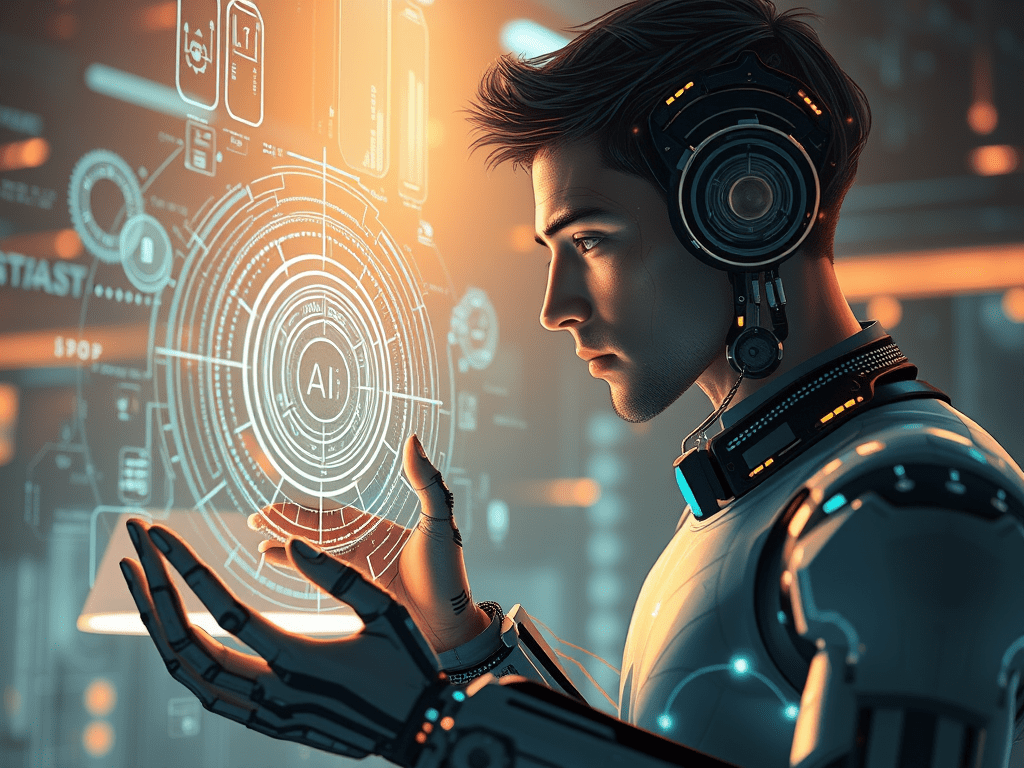
A Direct Link to the Key Skills You Need?
Imagine a future where critical skills are no longer painstakingly acquired through years of study and experience, but instead, downloaded directly into the human brain. While this may sound like the realm of science fiction, rapid advances in neurotechnology suggest it might not be as far-fetched as it once seemed. In this possible future, individuals will already possess baseline competencies, making development less about instruction and more about stretching existing strengths, enhancing creativity, and deepening strategic thinking.
Strengths-Based Leadership in a New Era
In this evolving landscape, leadership itself is undergoing a seismic shift. Rather than focusing on fixing weaknesses or pushing employees to meet rigid performance targets, leaders will adopt a strengths-based development approach. This method emphasises nurturing what people already do well and encouraging them to expand those talents in meaningful, innovative ways.
Crucially, leaders will need to foster environments of engagement, motivation, and inspiration. By paying close attention to the unique capabilities of their teams, they’ll ensure that employees remain enthusiastic and committed to their roles. In an increasingly virtual and globalised world, talent has the flexibility to work anywhere. If leaders fail to go the extra mile, retaining top talent will become exponentially harder.
From Targets to Transformation
The traditional performance conversation will be redefined. Instead of narrowly focusing on KPIs or quarterly goals, development discussions will centre around the question: “How can you be your absolute best?”Employees will be encouraged to bring forward ideas, drive innovation, and co-create value. Leaders will act as facilitators of growth rather than be enforcers of compliance.
This shift aligns with the concept of the “whole person paradigm”—acknowledging that employees are not merely task-executors but complex individuals with aspirations, talents, and lives beyond the workplace. Effective leaders will take a holistic view, investing in their people’s long-term growth, wellbeing, and sense of purpose.
Inspiring Through Experience, Not Instruction
In the future, leadership inspiration will not come from top-down direction but from crafting the right mix of experiences, challenges, and resources. Leaders will curate conditions in which employees are empowered to lead, experiment, and grow. As artificial intelligence and automation take over many routine tasks, human leadership will centre on creativity, empathy, and innovation—traits machines cannot yet replicate.
Vodafone’s AI-Powered Skills Mapping
Vodafone UK is already using AI to shape its workforce of the future. By deploying machine learning to map existing skills against future business needs, Vodafone identifies gaps and recommends bespoke learning journeys for each employee. This AI-driven system enables staff to access training aligned with their strengths and career aspirations—accelerating both personal and organisational development.
BP’s Digital Coaching Assistant
Energy giant BP has piloted a digital coaching assistant powered by AI to deliver real-time feedback and developmental suggestions to its leaders. This virtual coach uses natural language processing to analyse communication patterns, offering tips on improving collaboration, emotional intelligence, and decision-making. Rather than replacing human coaches, this tool augments leadership development, making it more accessible and continuous.
The Rise of the AI Performance Partner
We are entering an era where performance management could be entirely overseen by AI. Picture a daily, weekly, or quarterly conversation with an AI-driven performance partner—a digital coach that understands your strengths, tracks your achievements, and provides on-demand support and resources. Such a system could free leaders to focus on strategic direction and relationship building, trusting AI to handle operational performance conversations.
While this technology raises ethical and emotional considerations, its implementation could revolutionise leadership by automating administrative tasks and enabling hyper-personalised development for each team member.
Will AI Lead Better Than Humans?
The real challenge on the horizon is not just how humans will lead with AI—but whether AI will eventually lead better than humans. If AI can make more objective decisions, eliminate bias, and offer consistent development support, what role remains for human leadership? Could we be facing a future of machine-led leadership, or will human insight and emotional intelligence always hold a unique place in guiding teams?
A Future in Flux
We may be closer than we think to a world where leadership is redefined by algorithms and neural augmentation. As technology continues to evolve, leaders must stay curious, adaptable, and future-focused. The ability to integrate human empathy with technological precision will be the hallmark of the next-generation leader.
Watch this space—because the future of leadership is already here.